


The Fifth Utility Through a Data Engineer’s Eyes
Some people work on data. Others work on what data can do.
In Globe’s Enterprise Data and Strategic Services Group (EDS), a Ka-Globe has found a space where technical depth meets real-world impact, and where curiosity, ownership, and collaboration are more than just nice words on paper.
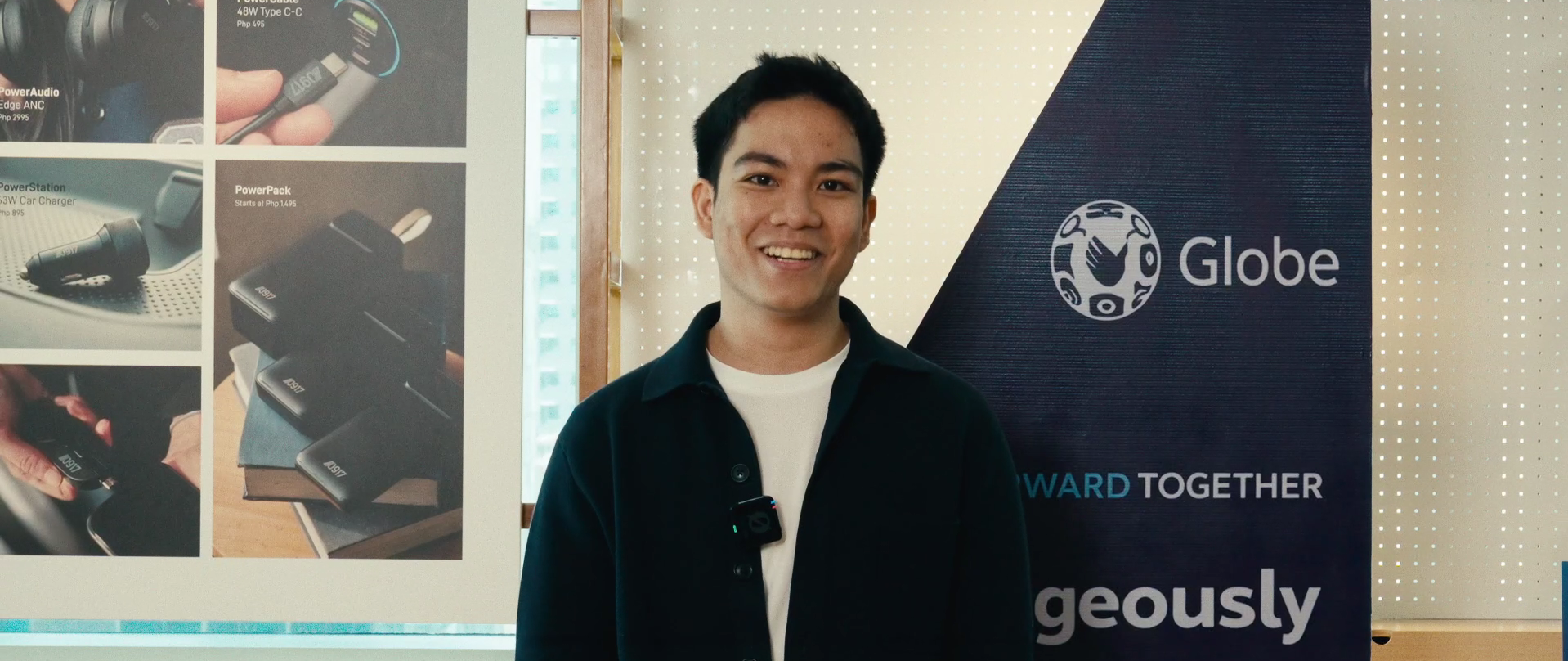
My name is Melchizedek “King” Recalde. Unique right? And yes, there’s definitely a story behind that.
I’m named after Melchizedek, the high priest from Genesis and Hebrews, specifically Genesis 14 and Hebrews 7. Since it translates to “King of Righteousness” and “King of Salem,” choosing my nickname was pretty easy. Weird flex, but honestly, the absolute best part of having a name this rare? Zero NBI hits, ever.

Outside of The Globe Tower, I’m definitely not a high priest. Kidding aside, I’m just a naturally curious guy who loves exploring, whether that’s trying food with a weird twist on a random weeknight, winding down with Marvel movies and Abbott Elementary for a good laugh, traveling to unfamiliar places, or staying physically active through pickleball and running. I also like writing my thoughts in a physical notebook. This kind of habit helps me slow down, organize my thinking, and make sense of moving parts more clearly.
Looking back, I think that curiosity has shaped a lot of my journey, including how I found my way into data engineering.
I actually started out in cloud engineering. At the time, I was focused on infrastructure, systems, and the technical side of making things run. But at some point, I realized I was becoming more interested in what happens inside the systems: how data moves, how it gets transformed, and how it eventually becomes something people can use to make better decisions.

That shift became real for me during a database migration project for a supermarket chain. We were moving their store data to the cloud to set up their analytics platform, and I got to see how raw purchase records translated directly into store strategy. Something as simple as knowing what people usually buy with bread could influence merchandising decisions. The same data could help shape product bundles for the Christmas rush.
That was the moment that hooked me.
I saw how backend data could have a very real-world effect, and I realized I didn’t just want to manage cloud setups. I wanted to build the data pipelines behind them.
That’s really what brought me to Globe. If you want to solve big, high-stakes data challenges and build for scale while helping millions of Filipinos, there’s no better place to do it.
And that’s exactly what makes the work in EDS so exciting. A lot of people hear “Data Engineering Expert” and imagine something purely technical, hidden somewhere in the backend. But for me, the job is really about turning Globe’s massive data into solutions that solve actual problems.

On some days, that means mapping network attributes to help a national agency track population mobility for disaster recovery. On others, it means building automated pipelines that extract clean datasets for loan modeling. There are also days spent setting up a privacy-preserving data clean room, running audience profiles for marketing campaigns, upgrading our internal data quality tools to automate system checks, or helping repoint the data sources of our team’s data products to another platform.
So yes, there’s a lot of engineering involved. But what makes it meaningful is that the outputs don’t stay in a dashboard or a database. They translate into action.
That’s one of the things I appreciate most about being in Data Innovation and Monetization. The work goes beyond crunching numbers. It pushes us to think about how data can create value responsibly, whether that value is commercial, operational, or social.
Right now, some of the initiatives I’m most excited about are centered on public good and digital trust.

On the public side, I help map raw network attributes to support a national agency in tracking population mobility for disaster resilience and recovery efforts. The data helps them understand crowd movement and allocate emergency resources more effectively during times of crisis. For me, that’s one of the clearest reminders that the work we do in data can help people in very practical ways when it matters most.
On the commercial side, we’re building platforms for financial inclusion, and I think that’s especially meaningful in the Philippine context. A lot of everyday people still can’t get small loans simply because they don’t have a traditional bank record, even if they use their phones every single day. What we’re building takes those daily network signals and turns them into privacy-safe insights that banks or financial apps can use to evaluate credit risk.
My role is to help build the pipelines that process those daily network logs. A big part of my focus is making sure the system automatically masks any personal details for total privacy, cleans up the data, and sends it securely to partner systems.

We have several projects with the goal of something I genuinely believe in: helping unbanked Filipinos gain access to basic financial tools, while giving our partners a secure, privacy-first way to help prevent identity fraud.
And I think that naturally connects to how I see culture, not just the work itself.
Out of all The Globe Way core values, the one I resonate with most is “We care like an OWNER.” That’s the one I try to live out every day.
There was one project we’re currently building where I noticed a gap in the design that could potentially create privacy and compliance issues down the line. Technically, evaluating the overall compliance architecture wasn’t part of my assigned role. My part was to help build the pipeline logic and configure the sharing setup.
But to me, caring like an owner means you don’t just stay in your lane and ignore a hole in the roof because “it’s not my job.”
So I raised it immediately. We paused, discussed the issue as a team, and aligned on a safer, privacy-compliant approach before moving forward with the build.

That, for me, is what The Globe Way looks like in action. We all have specific roles to play, but the success of the project is everyone’s responsibility. You’re never bounded by your job description when it comes to protecting the business, safeguarding trust, and making sure the team wins together.
That team mindset is also one of the reasons I enjoy being part of EDS.
What people may not immediately see from the outside is that this is a space where the problems are genuinely complex, but the culture is highly collaborative. You’re not stuck in a silo waiting for permission to contribute. You get exposure to large-scale data challenges, you work with people who are willing to mentor, and you’re encouraged to take ownership early.
If we were grabbing coffee and you told me you were thinking about joining EDS as a future data engineer, data scientist, or builder in general, I’d probably tell you this first: telecom and internet connectivity are truly the fifth utility now. It’s no longer a luxury. It’s a vital part of everyday life.
Working here means being part of something that directly touches millions of Filipinos every single day. I honestly look at it like being part of the Artemis II lunar mission. When you board Globe’s ship, you aren’t just taking your career to greater heights—you’re contributing to a massive, nationwide vision for a more connected world.

Of course, I’d also tell you the honest part: the scale here is real.
You’ll work on massive, complex data problems that you simply can’t find in smaller tech setups or startups. The challenge is real—processing petabytes, navigating strict privacy guardrails, and building low-latency systems that can’t afford to fail.
But that’s also where the growth happens.
Globe has been incredibly supportive of my development, and one thing I really value is how it invests in both strong fundamentals and emerging technologies.
We have Data Clinics that sharpen our understanding of core telecom data basics, and that matters because strong foundations are what allow us to build massive, scalable systems. On top of that, Globe covers the cost of specialized technical certifications that directly support our day-to-day engineering work, with learning tracks through Globe University.
One of my biggest “aha” moments here has been around AI.
Globe is really forward-thinking with AI integration, but what impressed me most is how they empower us as employees to adopt it in practical ways. Before joining, I already knew what AI was. But working here helped me better understand its real value—not as something that replaces my role as an engineer, but as a powerful tool that augments my work, boosts productivity, and helps us build smarter data pipelines.

So when people ask me what it’s like to work with this team, one word comes to mind: EXCELLENCE.
Not perfection, but excellence, the kind that comes from strong standards, shared accountability, and people who genuinely care about doing meaningful work well.
And one of the best career advice I’ve ever received is this:
You are not a savior, so don’t carry everything you can’t control. It will only burn you out. To me, that doesn’t mean caring less. It just means focusing your energy where it actually makes an impact.
I think that mindset has shaped the way I approach both engineering and teamwork. Stay curious. Take ownership. Protect what matters. Build well, but also build responsibly.
At the end of the day, that’s what this journey has been for me.
Not just writing pipelines. Not just moving data. But helping build systems that support better decisions, create access, protect trust, and make a real difference in people’s lives.
And if that kind of work speaks to you, EDS might just be the place for you too.
Curious about the people and possibilities behind Globe’s Enterprise Data and Strategic Services Group? Follow Globe on LinkedIn to discover more stories from the teams building solutions at scale—and if you’re ready to take on complex data challenges with real-world impact, explore opportunities to join EDS.









Comments