


Lost Your SIM? You Used to Wait 38 Hours. Now It Takes 11 Minutes.

How a cross-functional Globe team replaced 40+ disconnected tools with one intelligent platform — and turned the most dreaded store transaction into one of the fastest.
Picture this: you lost your phone. Maybe it slipped out of your pocket on the jeepney, or it disappeared at a coffee shop. You rush to the nearest Globe store because your number — your contacts, your GCash, your digital life — is tied to that SIM. You need it back.
Until recently, here’s what that visit looked like: you’d bring a notarized Affidavit of Loss and two valid IDs. A store agent would pull up more than 40 different, disconnected tools on their screen — toggling between systems just to verify your identity and check your registration. Your ownership couldn’t be confirmed at the counter, so your case got sent to a back office for 34 minutes of manual processing. Then you’d go home — and wait. On average, 38 hours before your new SIM was activated.
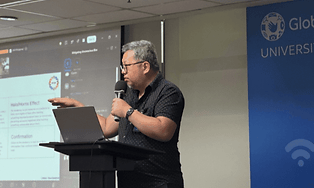
Where it matters most: the store counter, when a customer needs their connection back. Our retail frontliners, the face of Globe and the people CareHub was built for.
Almost nobody walked out of a Globe store with a working SIM that same visit.
Our retail frontliners are the face of Globe. But behind the scenes, they were fighting a daily battle against fragmented technology — high stress, high security risk, and long queues that left both agents and customers frustrated. A team from Globe’s Product Experience Group looked at this process and asked a deceptively simple question: which of these requirements exist only because our tools can’t tell us who the customer is?
Every answer pointed to the same gap. And once they saw it, they couldn’t unsee it.
The Insight That Changed Everything
When the Philippines rolled out mandatory SIM Card Registration, every Globe subscriber submitted their identity on record. That registry already holds exactly the information Globe’s stores needed to verify a customer standing at the counter — their name, their face, their number.
The old process was built before that registry existed. It demanded notarized documents, multi-step security interrogations, and manual ServiceNow tickets for every verification — because the store’s systems had no reliable way to confirm that the person in front of them was the rightful owner of the number. But with SIM registration data now available, most of those requirements were solving a problem that no longer existed.
So the team stopped patching the old workflow — and rebuilt it from scratch.
40+ Tools Out. One Platform In.
The innovation lives inside CareHub — a unified retail platform the team built to rescue both frontliners and customers from the chaos of disconnected tools.
Rather than building a slow, heavy database from scratch, the team took a smarter approach: they created a unified automation layer that aggregates and syncs over 40 disconnected webtools into a single, cohesive interface. Account status, registration records, activation controls — everything a frontliner needs now sits on one screen.
They also eliminated the legacy requirement of manually creating support tickets for every identity verification. Under the old system, data had to pass through manual gates before an agent could confirm ownership. With CareHub, SIM card activation is integrated directly with real-time SIM registration database validation — data flows autonomously through the system, creating what the team calls a foolproof verification process.
The requirements customers had to bring were stripped down to what actually matters. The notarized Affidavit of Loss? Gone. The second ID? Gone. The security questions that felt more like an interrogation? Gone. Customers now need just one valid ID, and their consent and attestation are enough to proceed — because the SIM registration record already proves who they are.
Inside the war room, where CareHub was built one modular release at a time. One screen instead of 40+ tools: everything a frontliner needs, in one place.
And the back-office step that added 34 minutes of manual work and a day-and-a-half wait? Eliminated entirely. The transaction now closes at the counter. CareHub even integrated barring and unbarring logic directly with the verification process, preventing accidental service disruptions and blocking fraudulent SIM swaps at the source.
Crucially, the team didn’t try to ship this all at once. They built CareHub in modular, incremental releases — each update launched without waiting on the next — so improvements reached customers fast while the broader system kept growing. Every release shipped with zero critical defects.
The Numbers Tell the Story
Every minute we took out is a minute given back.
The transformation didn’t just shave a few minutes off. It fundamentally redefined what a SIM replacement at Globe looks like.
38 hours → under 13 minutes.
That’s how long it now takes from the moment a customer walks in to the moment they walk out with a working SIM. The entire back-office step — 34 minutes of manual processing, verifier and approver escalation, plus a 24-to-48-hour wait — is gone. Frontliner handling time dropped by 29%, beating the team’s own 10% improvement target nearly threefold.
0% → 88% walkout rate with a working SIM.
Before CareHub, virtually no one left the store with their number working. Now, nearly 9 out of 10 customers do — immediate resolution, right at the counter.
Fewer SIM replacements needed in the first place.
Because CareHub can instantly verify account ownership, simple access issues are now resolved on the spot — reducing the need for a physical SIM replacement altogether.
73,000+ transactions and counting.
Live nationwide with over 600 store staff processing roughly 3,800 SIM replacements a week across lost, upgrade, and defective SIM cases.
Customer satisfaction score of 78 — 25 points above 2024.
The C-SIM experience scored a Net Promoter Score of 78 from over 1,000 respondents in June 2026, just two points shy of Globe’s aspirational target of 80 — and a dramatic leap from the 53 that store transactions scored in 2024 and 59 in 2025.
Zero fraud incidents since launch.
Fewer requirements didn’t mean weaker security — the opposite, in fact. By integrating barring and unbarring logic directly with SIM registration verification, CareHub prevents both accidental service disruptions and fraudulent SIM swaps. The new process is more secure than the old one. Not a single fraudulent transaction has been reported.
It Took a Village
Rebuilding something this embedded in Globe’s operations wasn’t a one-team job. CareHub was a cross-functional effort that brought together people from across the organization — each contributing expertise that no single group could have delivered alone.
It took a village: the people behind CareHub, together for a simple thanksgiving across the enterprise. Partners across the organization, celebrating a win no single team could have delivered alone.
The Product Experience Group led the charge, shaping the vision and driving execution from ideation through nationwide rollout. They were joined by partners across Fraud Management, Legal, IT and Systems Development, B2C, Customer Data, Customer Experience, and Infrastructure — a coalition that rethought not just the technology, but the policies, the risk models, and the frontliner experience that made it all work.
The CareHub team takes home Outstanding Achievement in Innovation (Non-Commercialized) at the 2026 Globe Excellence Awards. A win that belongs to everyone who helped customers walk out with a working SIM.
Their innovation earned the Outstanding Achievement in Innovation (Non-Commercialized) award at the Globe Telecom Excellence Awards 2026 — recognition that CareHub isn’t just a technical upgrade, but a genuine rethinking of how Globe serves its customers at the most critical moment: when they need their connection back.
What’s Next
CareHub is designed so that every new service built on it inherits the same speed, simplicity, and security gains without starting from zero. The platform already handles SIM upgrades, defective SIM replacements, and eSIM transactions, and the roadmap extends into postpaid, broadband, and acquisition.
The team has three big bets on the horizon. First, AI-powered fraud detection: facial recognition and biometric comparison that matches a customer walking into a store with their SIM registration photo ID — instantly. Second, a mobile version of CareHub for tablets, so roaming store staff can resolve concerns and process SIMs right on the showroom floor instead of behind a counter. And third, self-service kiosk integration, packaging CareHub’s verification logic to power in-store digital kiosks where customers can securely verify and register their own SIM cards without waiting for an agent.
If the first chapter of CareHub was about rescuing frontliners and customers from broken tools, the next chapter is about making the experience so seamless that the tools disappear entirely.
At Globe, innovation isn’t reserved for a lab or a special unit — it happens every day, driven by people who see a better way and build it.
Want to see more stories like this? Follow us on LinkedIn for the latest on how Globe employees are creating everyday possibilities.









Comments