


Inclusion Is Never Finished: Globe at the PFIP Pride Summit and Bahaghari Awards 2026

Globe joined the PFIP Pride Summit and earned its first-ever Bahaghari Award nominations. Five Pride Network Leads came back with lessons, and with a harder question to answer.

Every year, the Philippine Financial & Inter-Industry Pride (PFIP) brings companies from across industries together to talk about LGBTQIA+ inclusion at work. The focus is on what's working, what isn't, and what it takes to build workplaces where people don't have to hide who they are. This year's PFIP Pride Summit was held on September 10–11 at One Ayala, Makati. Over two days, leaders, advocates, and employee networks shared practices, stories, and challenges from their own organizations.
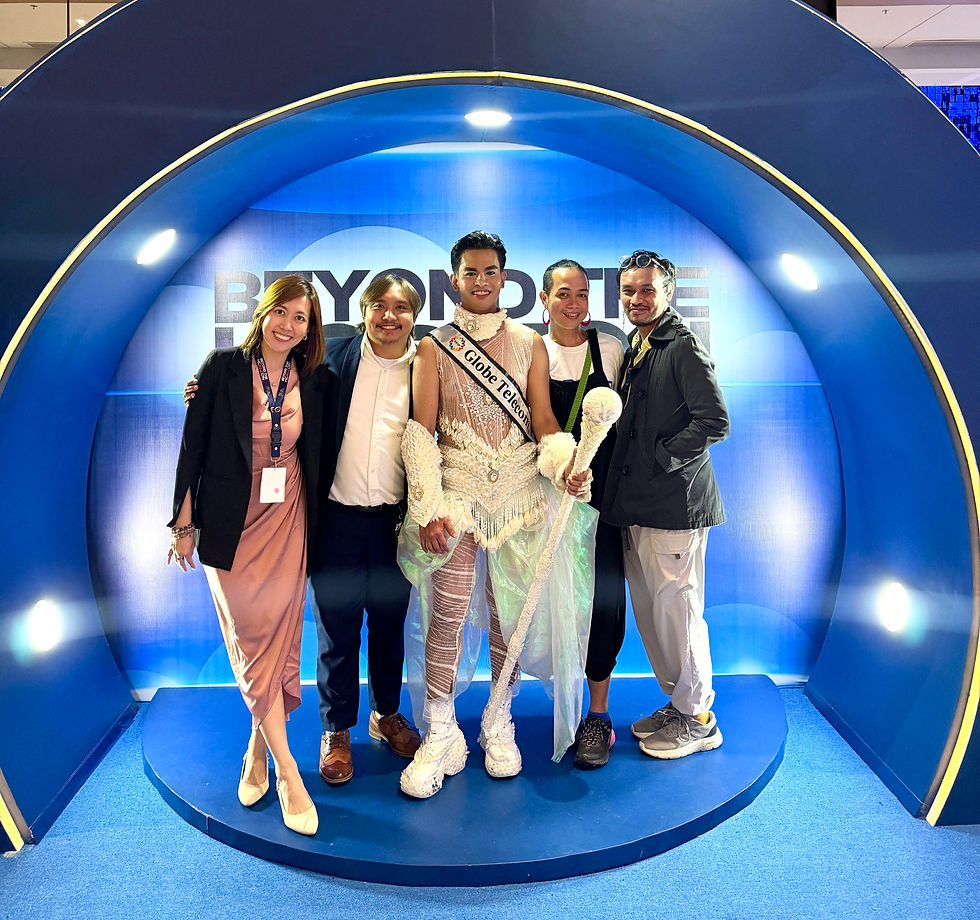
Globe was part of that conversation. The company sent five of its Pride Network Leads: MK Lacsamana (User Experience Assistant Director), Ruel Garro (Financial Planning and Analysis Manager), Lexy Aurelio (Core Transport Planning Expert), Jay Callueng (Strategy Execution Manager), and Diane Rodriguez (Culture, DEIB, and Communities Group Lead). Their participation is part of Globe's wider push to make diversity, equity, inclusion, and belonging (DEIB) part of how the company takes care of its people. That work is closely tied to Globe's employee wellness efforts and to the goal of a workplace culture where LGBTQIA+ Ka-Globes feel represented and affirmed.


The summit also hosted the Bahaghari Awards, which honor organizations and employee groups advancing LGBTQIA+ inclusion. This year, Globe was named a nominee in two categories: Company of the Year and Pride Network of the Year. It is the first time Globe has been recognized at the Bahaghari Awards. It is a first step, but a meaningful one.
The delegation came home with more than a nomination. They brought back ideas that will shape Globe's next DEIB initiatives and action plans. Here's what stayed with them.

"Inclusion is never finished."
MK Lacsamana expected the summit to cover familiar LGBTQIA+ topics. Instead, one of the sessions that stayed with him was a panel on neurodivergence in the workplace.
"There is a notable intersection between neurodivergent individuals and the LGBTQIA+ community. In fact, one survey indicated that up to 70% of autistic individuals also self-identify as non-heterosexual or queer. As someone who belongs to the LGBTQIA+ community and was recently diagnosed with Autism Spectrum Disorder, I fall directly into this intersection, and I recognize where gaps remain in the corporate environment."

Diane Rodriguez was struck by the same theme, particularly Krissy Bisda's session on the barriers faced by neurodivergent individuals and persons with disabilities.
"It reminded me that DEIB cannot stop at the dimensions we already know how to talk about. It has to continually challenge us to ask: Who have we not yet considered, and what does belonging look like from their point of view?"


Diane points out that even organizations with strong DEIB programs can have blind spots. Those blind spots usually belong to people whose experiences are less visible. For Globe, she sees the next step as going beyond symbolic representation.
"We can strengthen belonging by listening more intentionally to LGBTQIA+ employees, equipping leaders to create psychologically safe teams, and making inclusion part of how we hire, develop, recognize, and support people, not something we revisit only during Pride Month."
MK agrees. He points to practical areas like how teams communicate, how they collaborate, and how they make room for different working styles.
"No matter how inclusive an organization believes it is, there are always intersectional areas to improve upon."
Lexy Aurelio also added:
" Neurodivergent individuals were already at the workplace, we just needed to find a way to find them and create a safespace for them. While creating a safe space, we can also create awareness for all the employees to be more aware who are these people."
Feeling seen, and building the structures that make it last
The delegates approached inclusion from two sides, and both matter.
Ruel Garro represented Globe Telecom at the Pride Summit 2026 Parade of Companies
For Ruel Garro, it starts with the human experience.
"Inclusion is not just about having policies or programs. It's really about making people feel seen, heard, valued, and accepted for who they are. Sa Globe, we can continue creating safe and supportive spaces where LGBTQIA+ employees can be their authentic selves, speak up, grow, and contribute without fear of being judged."

Jay Callueng focused on the structures that keep that feeling from fading. One example stood out to him: JPMorganChase has an office dedicated to LGBTQIA+ affairs. "Globe and the broader Ayala Group could explore a similar structure to provide sustained advocacy, representation, and accountability," Jay says. He sees room to extend it to other underrepresented groups, including persons with disabilities. He also pushes back on the idea that inclusion and performance compete.
"Inclusion is not a challenge to productivity. It can strengthen employee engagement, collaboration, and overall organizational performance."
What the nomination means to them
For the delegates, being named a nominee for the first time mattered.


"Nakakatuwa at nakaka-proud makita ang Globe being part of this movement," Ruel says. He also thanked Globe management for supporting the delegation's participation. "Sana ma-inspire tayo as Ka-Globe to not just celebrate diversity, but to be intentional allies."
Jay sees it as a sign of how Globe is changing.
"It gives LGBTQIA+ employees a sense of pride and belonging, knowing that we are recognized for who we are, what we contribute, and what we stand for."
MK adds that recognition doesn't mean the work is done. "While we have made great strides, we recognize there is still room to grow, and we remain dedicated to learning and improving year after year."
For Diane, the nomination is a sign of progress rather than a finish line. "I see it as a marker of momentum," she says, "a sign that the structures, conversations, and everyday choices we have been building are beginning to move us in the right direction." She credits the leaders who championed DEIB, the Pride Network communities who keep the conversation going, and "every Ka-Globe who has shared an experience, asked a difficult question, or helped create a more welcoming space for someone else."
Lexy also adds:
"As a Ka-Globe and member of the LGBTQ+ community, Globe Telecom is taking a stand to make the workplace more inclusive and safe for everyone to work and that is something I am proud of. I hope that every employee will be able to recognize what Globe has been doing. We need more participation and voices, if we can bring this to the global stage, that would mean the world not just to me, but to every LGBTQ+ member in the society."
The question every Ka-Globe answers
Diane keeps coming back to one question: Who truly belongs here?
"Every employee answers it silently," she says, "through whether they speak up, participate, stay, and feel free to show up as their whole self."
I hope it inspires us to keep going, with greater courage, accountability, and intention, until every Ka-Globe can genuinely say: 'I belong here.'
Globe's first time as a Bahaghari Awards nominee isn't the end goal, but it shows the work is moving forward. The Pride Network will turn what it learned at the summit into DEIB initiatives for Ka-Globes in the months ahead. Follow Globe on LinkedIn for more stories about the people and programs building a more inclusive Globe.








Comments